Key takeaways
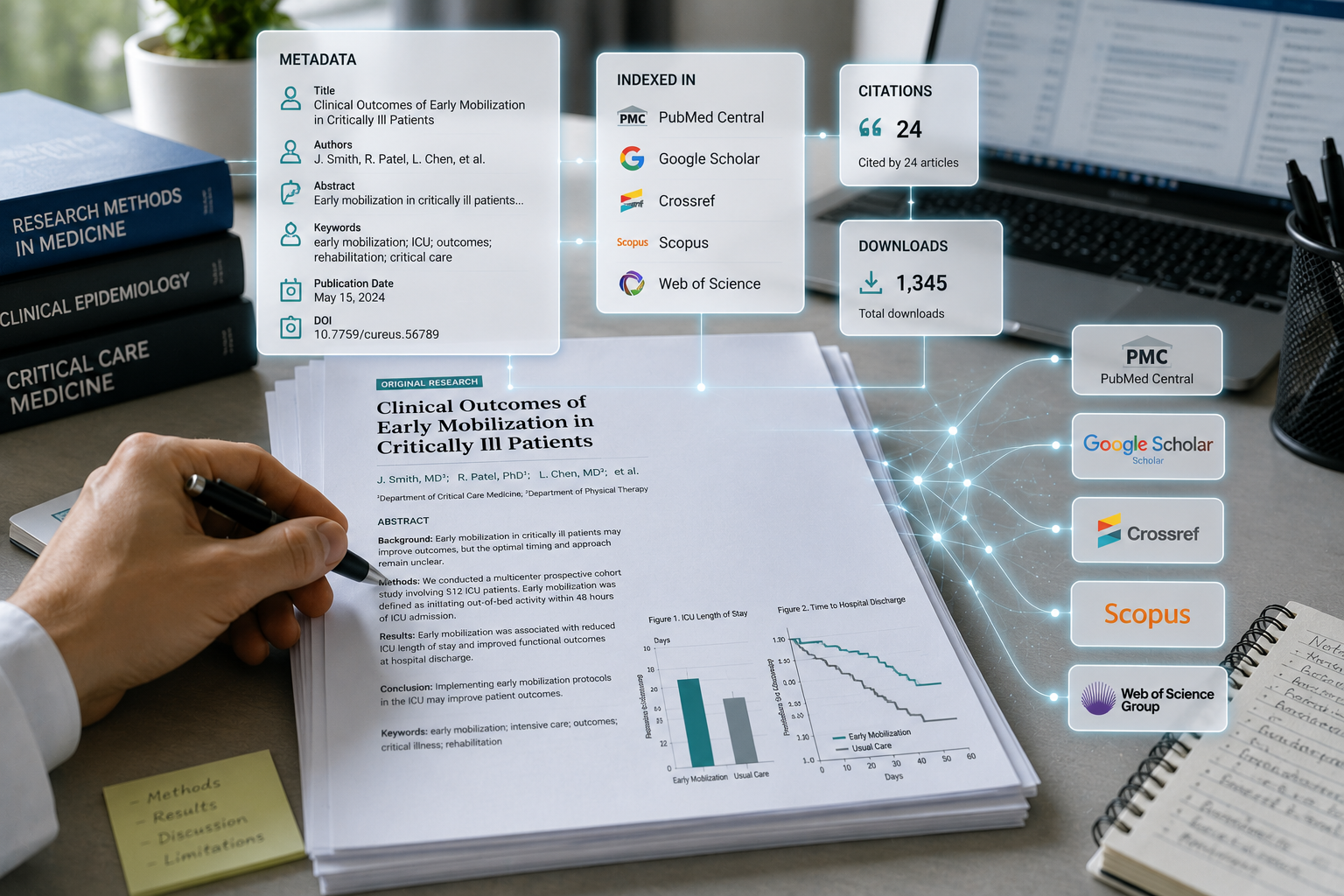
- Structured metadata and clear abstracts affect scientific discoverability by determining whether AI systems can accurately parse and cite a study.
- Open access articles are retrieved, summarized, and cited by AI tools far more consistently than paywalled research, improving research discoverability for authors.
- Semantic search matches meaning rather than exact phrasing, so specific, clear terminology helps AI systems connect research to relevant questions.
- Citations and cross-references act as trust signals that AI systems use to judge a study's credibility.
- Transparent, responsible reporting reduces the risk of AI systems oversimplifying or misrepresenting research findings.

Metadata: the hidden framework behind discoverability
What metadata includes
Metadata is the structured information attached to a research article, including:
- Author names
- Publication date
- Subject tags
AI systems rely on this information heavily to categorize research and determine whether an article is relevant to a given question. Without accurate metadata, even strong research can struggle with scientific discoverability. Organizations such as the National Information Standards Organization (NISO) maintain the shared metadata standards that publishers rely on to keep this information consistent across the industry.
How indexing extends metadata's reach
Indexing works alongside metadata to make research retrievable. Once an article is properly indexed, it becomes part of a searchable database that both traditional search engines and AI systems can query quickly.
National indexes such as MEDLINE, maintained by the U.S. National Library of Medicine, illustrate how much scrutiny this kind of indexing can involve, since journals are assessed on editorial and technical quality before their articles are included at all.
This is one of the less visible parts of research dissemination, but it has a direct effect on research discoverability, since AI systems favor sources they can locate and confirm quickly.
Structured abstracts help AI systems understand research
Why structure matters more than length
A structured abstract, divided into clear sections, gives AI systems an easier path to accurate summarization:
- Background
- Methods
- Results
- Conclusions
An unstructured abstract forces AI tools to guess which sentence represents the actual finding, which raises the risk of misinterpretation and limits scientific discoverability.
Structure as a discoverability tool
This directly supports research visibility, because AI systems are more likely to surface and quote from research they can parse with confidence. A well-structured abstract is essentially a research discoverability tool built into the article itself.
Open access expands who and what AI systems can read

Full-text access changes how AI retrieves research
AI systems generally favor sources they can access in full, which shapes scientific discoverability from the start. Open access articles let AI tools read the complete text rather than a paywalled abstract.
This means open access research is retrieved, cited, and summarized far more consistently.
The cost of staying behind a paywall
This has a real effect on research discoverability for authors. A paywalled study may be technically indexed, but an AI system often can't verify its content well enough to cite it with confidence.
Open access removes that barrier, supporting broader research dissemination across borders and specialties, and Cureus built its entire publishing process around this principle.
Citations create a web AI systems can follow
Citations as connective infrastructure
Citations connect individual studies into a larger, interconnected body of knowledge. When an article cites other credible work, AI systems use those in-text citations to understand how a finding fits into the wider scholarly communication landscape.
Citation infrastructure organizations such as Crossref maintain the persistent links between articles that keep this citation web from breaking down over time.
Citations as a trust signal
Cross-referencing also acts as a trust signal. A well-cited article signals to AI systems, and to human readers, that findings are grounded in established research rather than presented in isolation.
This is part of why research integrity standards matter so much, since they keep the citation web accurate and dependable for research discoverability over time.
Looking beyond a single metric
Cureus is a signatory of the Declaration on Research Assessment (DORA), an international initiative that encourages responsible use of research metrics rather than relying on a single score.
That approach fits naturally with how AI systems weigh a study: not by one number, but by the fuller picture that citations, metadata, and reporting quality provide together.
Semantic search looks for meaning, not just matching words
Matching intent, not just keywords
Semantic search allows AI systems to match a question with relevant research even when the wording differs. Rather than searching for exact keyword strings, semantic search interprets intent, so a study on postoperative infection rates can still surface for a question about complications after surgery.
Structured data standards such as Schema.org help systems interpret content more precisely, which is part of why semantic matching keeps improving.
Why precise language still matters
This makes clear, specific language more valuable than ever for scientific discoverability. Vague terminology can cause otherwise strong research to be overlooked simply because an AI system can't confidently match its meaning to a reader's question, which limits research visibility no matter how sound the findings are.
How AI systems synthesize research from multiple sources

Combining evidence across studies
AI search does not stop at finding a single article. Many tools now combine findings from several studies to answer a broader question.
This means research discoverability increasingly depends on how a study's conclusions align or conflict with related work already in circulation.
Where synthesis can go wrong
When AI systems synthesize research this way, contradictions or unclear methodology can lead to confusing or inaccurate summaries. Studies that clearly state their scope, sample size and limitations are easier for AI systems to weigh correctly against other sources.
This supports scientific discoverability across a growing and interconnected body of literature.
Responsible reporting keeps AI summaries accurate
The risk of overstated claims
AI tools are only as accurate as the research they summarize. Overstated conclusions, unclear limitations or missing context can lead an AI system to repeat an oversimplified or misleading version of a study's findings.
How transparency protects everyone
Responsible reporting protects both readers and researchers. Clear, honest descriptions of methods and limitations make it easier for AI systems and human readers to represent a study fairly, which ultimately strengthens research visibility rather than risking it.
It also supports research discoverability over time, since AI systems tend to favor sources with a consistent record of accuracy.
How Cureus supports discoverability and visibility
Cureus has built several features specifically to support research discoverability:
- Curated collections group related articles by topic, making it easier for both readers and AI systems to find connected research in one place.
- Altmetric badges track how an article is discussed online, offering another signal of research visibility beyond citation counts alone.
- Readers exploring the platform can rely on eight ways to browse published articles across specialties, formats, and topics.
As AI search continues to shape how medical research is found and understood, Cureus remains focused on making open access publishing as discoverable as possible for AI systems and human readers alike. The way a study is structured, tagged, and made freely accessible increasingly shapes whether it can be found at all by machines and people in equal measure.
Explore research on Cureus
As AI search continues to reshape how medical research is found, readers still play a central role in shaping which work stands out. Reading, rating and discussing published research helps highlight strong work for other readers and for the AI systems that increasingly reference it.
Do your part to improve research visibility and promote discoverability by reading and rating articles in the Cureus Journal of Medical Science.

Frequently asked questions
Q: What is research discoverability?
A: Research discoverability describes how easily a study can be found, read, and cited, whether by a human reader, a traditional search engine, or an AI system. It depends on factors such as metadata, citations, structure, and access, not just the quality of the writing. Browsing published articles on Cureus is one way to see these elements at work across specialties.
Q: How does AI search find and cite medical research?
A: AI search tools read the full text of an article when they can, then rely on structured elements such as metadata and citations to judge relevance and reliability. Clear, well-organized articles are easier for these systems to summarize accurately.
Q: Does open access improve research visibility for AI systems?
A: Generally, yes. AI systems tend to favor sources they can access and verify in full, so open access research is usually retrieved, cited and summarized more consistently than work locked behind a paywall, which supports research visibility over time.
Q: What is semantic search, and why does it matter for scientific discoverability?
A: Semantic search matches the meaning behind a question rather than exact keywords. A study described with clear, specific language can surface for related questions phrased differently, which supports scientific discoverability across a wider range of searches.
Q: How does metadata affect whether a study gets indexed?
A: Metadata such as subject tags, author details and publication dates helps indexing systems categorize a study correctly. Missing or inaccurate metadata can lead to incomplete indexing, which limits research discoverability even when the underlying research is sound.


Join the discussion
Add your email, first name, and last name to leave a comment.